
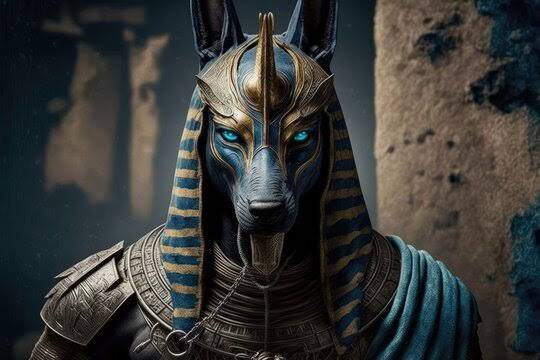
Anubis: The Enigmatic God of the Dead in Egyptian Mythology

kfoodfair2015.com – Anubis, the ancient Egyptian deity, is one of the most recognizable figures in the pantheon of gods and goddesses that populated the mythology of the Nile Valley. Often depicted as a man with the head of a jackal or as a black canine, Anubis was a multifaceted deity whose roles included being the God of the Dead, the God of Embalming, and the God of Mummification. His significance in Egyptian mythology and religious practices spanned thousands of years, reflecting the deep-seated beliefs of the ancient Egyptians regarding death, the afterlife, and the transition between the two.

The Origins and Evolution of Anubis

The origins of Anubis are somewhat shrouded in mystery, with his worship dating back to the Early Dynastic Period of Egypt. Initially, he was not solely associated with death and the afterlife; rather, he was a more general god of the desert, which was considered a dangerous place by the ancient Egyptians. Over time, his role evolved, and he became more closely associated with the dead and the process of mummification. This transition was likely due to the desert’s role as a place of burial, where the bodies of the deceased were interred in the sands.

The Role of Anubis in the Afterlife

Anubis’s primary role was that of a psychopomp, a guide for the souls of the dead. He was believed to lead the souls to the Hall of Ma’at, where their hearts would be weighed against the feather of truth. This judgment determined whether the soul would be granted eternal life or be devoured by Ammit, the devourer of souls. Anubis was also responsible for overseeing the embalming process, ensuring that the body was properly preserved for the afterlife. This was crucial, as the ancient Egyptians believed that the preservation of the body was essential for the soul’s journey in the afterlife.

Anubis in Egyptian Culture and Religion

Anubis was a central figure in Egyptian funerary practices and was often depicted in art and literature. Temples dedicated to Anubis were places of worship and ritual, where people would seek his favor and protection in the afterlife. He was also invoked in magical texts and spells, which were believed to offer protection and guidance to the deceased.

The Symbolism of Anubis

The jackal, which Anubis is often depicted as, was a symbol of both death and rebirth. This duality reflects the ancient Egyptian view of death not as an end but as a transition to another form of existence. Anubis’s association with the jackal also ties him to the desert, a place of both danger and transformation, where the bodies of the dead were mummified and prepared for their journey into the afterlife.

Conclusion

Anubis, the God of the Dead, embodies the ancient Egyptian fascination with death and the afterlife. His role as a protector and guide for the souls of the deceased reflects the deep-seated belief in an afterlife and the importance of proper burial and mummification. Through his evolution from a desert god to a deity closely associated with death and the afterlife, Anubis remains one of the most intriguing and enduring figures in Egyptian mythology. His legacy continues to captivate the imagination, serving as a testament to the rich cultural and religious heritage of ancient Egypt.
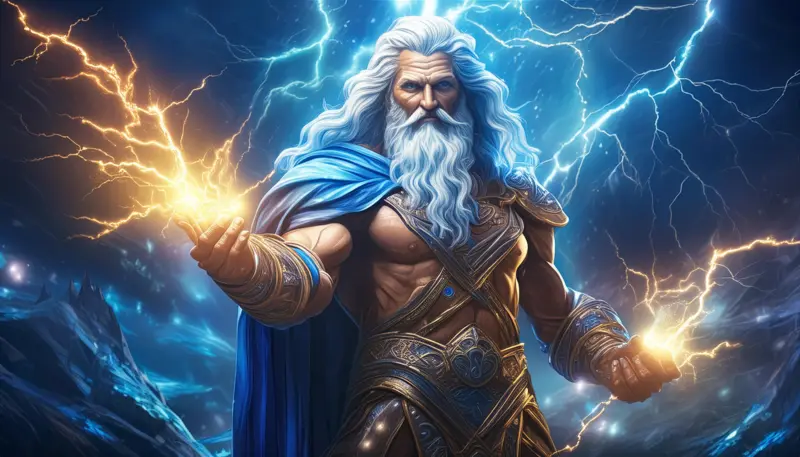
Zeus: The Almighty King of the Gods in Greek Mythology

kfoodfair2015.com – In the rich tapestry of Greek mythology, no figure looms larger than Zeus, the king of the gods and the ruler of the heavens. His story is one of power, passion, and the complexities of divi

ne rule. From his triumph over the Titans to his reign on Mount Olympus, Zeus’s life is a testament to the enduring allure of Greek mythological narratives.

The Birth and Rise of Zeus

Zeus’s journey to supremacy began in the womb, where he was protected from his father, Cronus, who feared a prophecy that one of his children would overthrow him. Zeus was saved by his mother, Rhea, and raised in secret on the island of Crete. Upon reaching adulthood, Zeus forced Cronus to disgorge his siblings, and together they waged war against the Titans, eventually triumphing in the Titanomachy. This victory established Zeus as the king of the gods, a position he would hold for eternity.

The Reign of Zeus

As king of the gods, Zeus’s domain extended over the sky and the weather, making him the ultimate arbiter of natural phenomena. His power wasGod unmatched, and his will was law among both deities and mortals. Despite his authority, Zeus was not a tyrant; he presided over a council of the twelve most powerful gods, known as the Olympians, who together governed the universe.

The Personal Life of Zeus

Zeus’s personal life was as tumultuous as his reign was stable. Known for his insatiable appetite for love, Zeus pursued countless mortal and immortal women, often disguising himself to win their affections. These unions produced a vast array of offspring, many of whom became significant figures in their own right, such as Heracles, Perseus, and Dionysus.

Zeus’s relationships were not limited to consensual affairs; he was also known for his abductions and seductions, which often led to conflict and tragedy. Despite his numerous dalliances, Zeus was married to Hera, the goddess of marriage and childbirth, whose jealousy and wrath were legendary. Their tumultuous relationship was a recurring theme in Greek mythology, symbolizing the complexities of marriage and the divine.

The Legacy of Zeus

Zeus’s legacy is one of power, authority, and the humanization of the divine. Through his stories, the ancient Greeks explored themes of justice, morality, and the consequences of divine intervention in human affairs. Zeus’s reign was not just a narrative of godly rule but also a reflection of human society and its values.

In modern times, Zeus remains one of the most recognizable figures from Greek mythology, symbolizing the archetype of the powerful leader. His image and attributes have been adopted in various cultural and artistic expressions, from literature and film to art and architecture.

Conclusion

Zeus, the king of the gods, embodies the essence of Greek mythology: a blend of power, passion, and the human condition. His story is a timeless narrative that continues to captivate and inspire, reminding us of the enduring appeal of the ancient Greeks’ rich mythological heritage. As we look to the past, Zeus stands as a testament to the gods who once ruled the heavens and the imaginations of mortals.