
kfoodfair2015.com – Have you ever wondered how a simple pair of glasses can transform a blurry world into one of crisp clarity? Glasses have been an essential tool for correcting vision for centuries, aiding millions of people in seeing the world more clearly. But how exactly do these lenses work their magic? This article delves into the science behind how glasses improve vision.
Understanding Vision Impairments
To understand how glasses improve vision, we first need to grasp the basics of common vision impairments. The most prevalent conditions include myopia (nearsightedness), hyperopia (farsightedness), and astigmatism. These conditions result from the inability of the eye to focus light correctly on the retina, the light-sensitive layer at the back of the eye.
- Myopia (Nearsightedness): In myopia, the eyeball is too long or the cornea is too curved, causing light to focus in front of the retina. This results in distant objects appearing blurry while close objects remain clear.
- Hyperopia (Farsightedness): Hyperopia occurs when the eyeball is too short or the cornea is not curved enough, causing light to focus behind the retina. This makes nearby objects appear blurry, while distant objects are seen more clearly.
- Astigmatism: Astigmatism is caused by an irregular curvature of the cornea or lens, leading to distorted or blurred vision at all distances.
How Glasses Correct Vision
Glasses correct these refractive errors by altering the path of incoming light so that it focuses properly on the retina. Here’s how they work for each condition:
- Concave Lenses for Myopia: Glasses for nearsighted individuals use concave lenses, which spread out light rays before they enter the eye. This adjustment moves the focal point back onto the retina, allowing distant objects to come into focus.
- Convex Lenses for Hyperopia: For farsighted individuals, glasses use convex lenses. These lenses converge light rays before they enter the eye, moving the focal point forward, onto the retina. This adjustment helps in seeing close objects more clearly.
- Cylindrical Lenses for Astigmatism: Astigmatism is corrected with cylindrical lenses, which compensate for the uneven curvature of the eye. These lenses adjust the direction of light entering the eye, ensuring a single point of focus on the retina.
The Role of Prescription
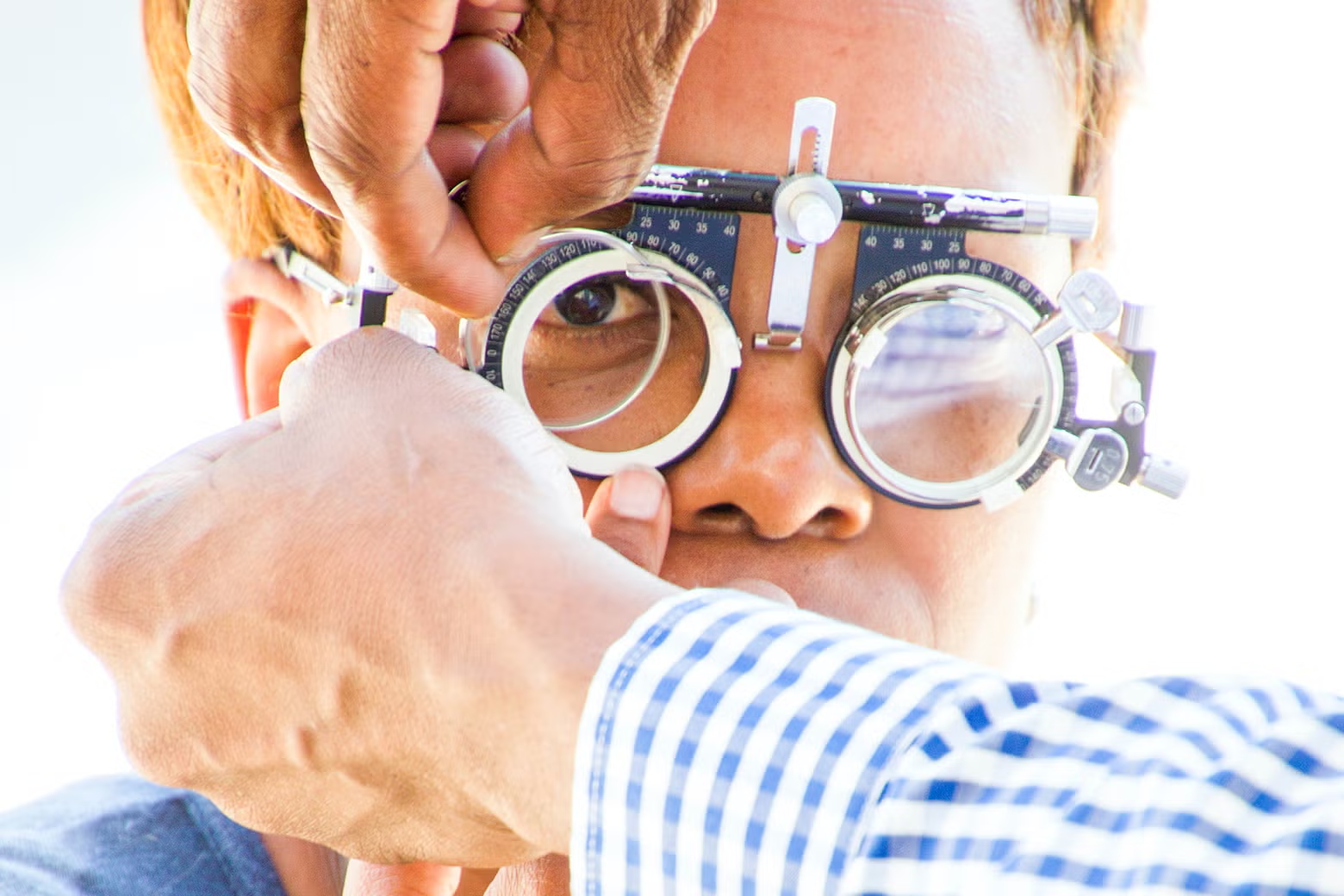
An optometrist determines the correct lens prescription by measuring the refractive error of the eyes. This prescription specifies the lens power needed to correct vision, often noted in diopters. It includes information on sphere (overall lens power), cylinder (astigmatism correction), and axis (orientation of astigmatism correction).
Advancements in Lens Technology
Modern lenses have come a long way from the simple glass lenses of the past. Today, lenses are made from lightweight materials and can include various coatings for added benefits, such as anti-reflective coatings to reduce glare, and photochromic lenses that adjust to changing light conditions.
Conclusion
Glasses are a remarkable feat of optical engineering, harnessing the power of science to correct vision and enhance quality of life. By understanding the unique needs of each individual’s eyes, glasses provide a tailored solution that brings the world back into focus. Whether for reading, distance, or both, glasses continue to be an invaluable tool in the realm of vision correction.