
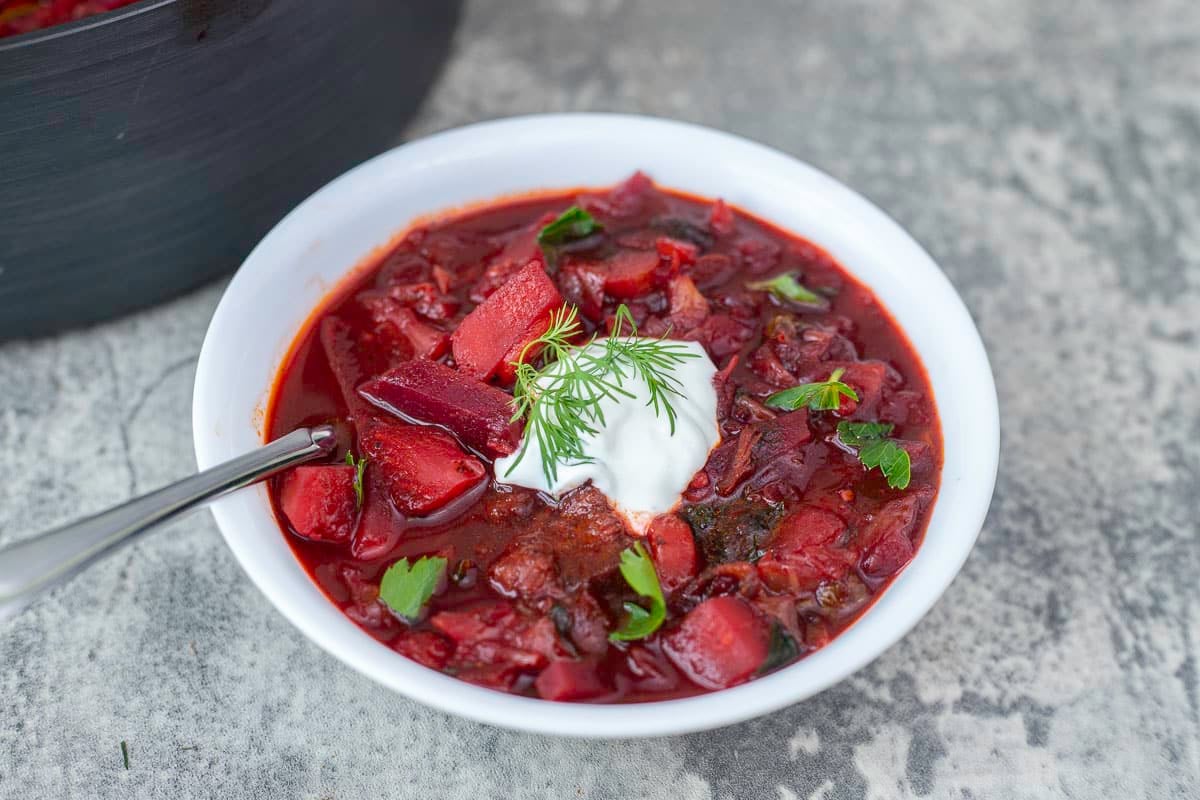
kfoodfair2015.com – Borscht is a traditional Eastern European soup that has gained international popularity for its vibrant color, hearty texture, and rich flavors. While variations exist across different cultures, borscht is most commonly associated with Ukraine, Russia, and Poland. The star ingredient of this soup is beetroot, which gives it its signature deep red hue, along with a perfect blend of savory, tangy, and sweet flavors. It is often served with sour cream, adding a creamy richness that complements the soup’s bold taste.
Key Ingredients
The core ingredients of borscht include beets, cabbage, potatoes, and broth. The combination of these elements creates a comforting and nutritious dish that can be made with either meat or a vegetarian base.
- Beets: The main ingredient, beets provide the vibrant color and earthy flavor that are characteristic of borscht. They are typically shredded or sliced into thin pieces to infuse the broth.
- Cabbage: Often shredded, cabbage contributes a mild sweetness and texture, complementing the beets and balancing the acidity of the soup.
- Potatoes: Potatoes help to thicken the soup and provide a creamy consistency once cooked.
- Broth: Borscht can be made with a meat-based broth (usually beef or pork) for a rich, savory flavor or with vegetable broth for a lighter, vegetarian version.
Other ingredients commonly included are carrots, onions, garlic, and tomatoes. The soup is often seasoned with dill, bay leaves, and sometimes a touch of vinegar or lemon juice to add a delightful tanginess.
The Cooking Process
The process of making borscht typically starts by sautéing onions, carrots, and garlic in oil until they soften and develop flavor. Then, the shredded beets and potatoes are added along with the broth. As the soup simmers, the beets release their natural sweetness, while the cabbage and potatoes cook down to create a heartier texture.
In many recipes, a small amount of tomato paste or chopped tomatoes is added for richness, and the soup is left to simmer for an hour or more to allow the flavors to meld together. Some variations include adding meat, such as beef brisket or pork ribs, which are cooked in the broth to enhance the flavor.
Serving Borscht
Borscht is traditionally served hot or cold, depending on the season and personal preference. In the colder months, it is typically enjoyed hot with a dollop of sour cream on top. The sour cream not only adds richness but also helps balance the acidity of the soup.
Accompaniments like rye bread, garlic bread, or pampushki (Ukrainian garlic rolls) are common, providing a perfect contrast to the soup’s smooth texture.
Variations Around the World
While the basic components of borscht remain consistent, there are many regional variations:
- Ukrainian Borscht: Known for its hearty, meat-based version, Ukrainian borscht often includes pork or beef and may be garnished with fresh herbs and hard-boiled eggs.
- Russian Borscht: Typically made with beef, Russian borscht tends to have a stronger meaty flavor and may include more potatoes and cabbage.
- Polish Borscht (Barszcz): Polish borscht, or “barszcz,” is often served as a clear, brothy soup and may be eaten on its own or with dumplings (uszka). It is often made with a sourdough starter and is sometimes served as part of Christmas Eve dinner.
- Vegetarian Borscht: A meat-free version that substitutes vegetable broth for meat-based stock and often uses mushrooms or beans for added depth of flavor.
Conclusion
Borscht is more than just a soup—it’s a beloved tradition that spans generations and countries. Whether made with meat or as a vegetarian dish, this beetroot-based soup is a versatile and nourishing meal that brings warmth and comfort to the table. With its vivid color, satisfying texture, and balance of flavors, borscht remains a staple in Eastern European kitchens and beyond.